Notice: Planned maintenance on October 20th. Learn more >
About the Course
Introduction
This CLE webinar will explore some of the more difficult issues counsel face when structuring, evaluating, or challenging CERCLA settlements. The panel will provide a brief framework for government and private party settlements and then take a deeper look at contribution protection, claims available to settling parties, limitations issues, settlement challenges, and the scope of covenants and reopeners.
Description
Settlements resolve most Superfund matters, but difficult questions often remain over the scope of the matters addressed and the rights and liabilities that remain after settlement. These issues can significantly affect both settling and non-settling PRPs long after an agreement is executed. Recent decisions have further developed the relationship between CERCLA Sections 107 and 113 and the claims available following settlement. Counsel must also consider liabilities that may remain outside the settlement, including those arising under other authorities or following later-discovered conditions.
The panel will use recurring CERCLA settlement problems to examine these questions from the perspectives of both settling and non-settling parties. The discussion will focus on how the governing rules operate in practice, where uncertainty remains, and how settlement choices may affect later claims and litigation.
Listen as our panel examines these and other difficult CERCLA settlement issues and discusses strategies for protecting PRP interests throughout the settlement process.
Presented By

Mr. Mandelbaum represents clients facing problems under the environmental laws. He regularly represents clients in lawsuits and also has helped clients achieve satisfactory outcomes through regulatory negotiation or private transactions. A Fellow of the American College of Environmental Lawyers, Mr. Mandelbaum teaches Superfund, and Oil and Gas Law in rotation at the Temple University Beasley School of Law as well as an environmental litigation course at Suffolk (Boston) Law School. He has been engaged in matters involving allocation of costs among responsible parties, especially under the Comprehensive Environmental Response, Compensation and Liability Act (CERCLA). Mr. Mandelbaum has tried large cases and resolved others as lead counsel. He has written, spoken, and taught extensively on the subject.

Mr. Showalter is a litigator focusing on business and public policy disputes. He is well-versed in decades-old statutes and regulations that govern rapidly evolving issues such as fracking, superfund remediation, and carbon capture sequestration. While much of his recent work involves disputes arising under environmental statutes including CERCLA, RCRA, the Clean Air Act, and the Clean Water Act, Mr. Showalter has represented parties involved in commercial, class action, toxic tort, and regulatory litigation in courts throughout the U.S. He defends parties against "citizen suits" brought by private parties and non-governmental organizations alleging that their activities have violated federal or state law. Successes include securing the dismissal with prejudice – upheld by the Ninth Circuit – of a case alleging that a West Coast utility's use of hundreds of thousands of telephone poles was illegal, and securing the dismissal of air-related claims at the federal and state level against a Midwestern utility
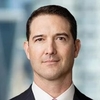
Mr. Talbert is an accomplished trial attorney and environmental lawyer who focuses on environmental litigation, permitting, and risk management. He has significant experience in all major environmental statutes and has litigated cases across the country. Mr. Talbert has worked on over 70 contaminated sites nationally and has served as a mediator in environmental disputes, including the allocation of costs at Superfund Sites. Prior to joining the firm, he led the environmental group at a Chambers-ranked law firm and was a Trial Attorney at the U.S. Department of Justice’s Environmental Enforcement Section. At the U.S. DOJ, Mr. Talbert led one of the largest Clean Water Act cases in U.S. history, the first Clean Air Act case under EPA’s pulp and paper initiative related to New Source Review, the largest Natural Resource Damages case under the Park Service Resource Protection Act, and numerous CERCLA and RCRA cases. He received numerous awards for his work, including EPA's Gold Medal for exceptional service. Mr. Talbert was named a 2025 "Lawyer of the Year" for Environmental Litigation and is a Band 1 ranked lawyer on Chambers USA.
-
This 90-minute webinar is eligible in most states for 1.5 CLE credits.
-
Date + Time
- event
Thursday, October 29, 2026
- schedule
1:00 PM ET/ 10:00 AM PT
I. CERCLA settlement framework and current context
II. Scope of settlement and contribution protection
III. Preserving contribution and cost recovery claims
IV. Limitations periods and segmented claims
V. Challenging and defending settlements
VI. Covenants not to sue, reopeners, and liabilities outside the settlement
VII. Conclusion
The panel will review these and other key issues:
- How broadly may contribution protection and the matters addressed by a CERCLA settlement extend?
- What contribution or cost recovery claims may remain available to a settling PRP, and for which costs?
- How do settlement terms affect accrual, limitations periods, and the preservation of future claims?
- When should a settling or non-settling PRP challenge or defend a CERCLA settlement?
- How should counsel address covenants not to sue, reopeners, emerging contaminants, and liabilities outside the settlement?