Thank you!
The full article is available below.
You will also receive a follow-up email containing a link so you can come back to it later.
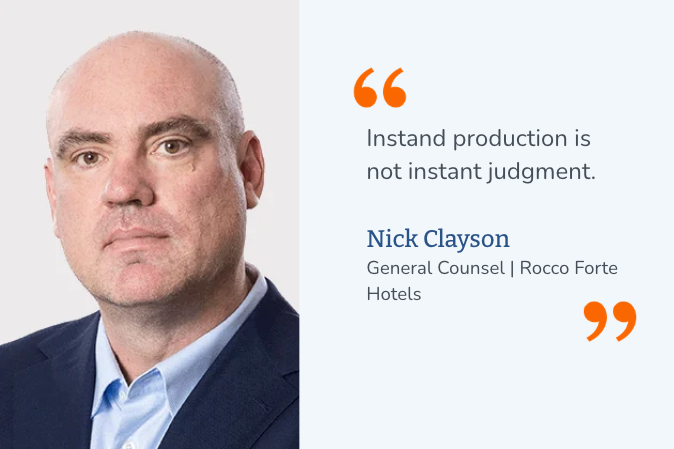
“Instant production is not instant judgement.”
Nick Clayson, General Counsel at Rocco Forte Hotels and a member of BARBRI’s Professional Education Advisory Board recently published his take on AI and how it is really impacting the industry. Like most lawyers, Nick uses AI tools every day. The more he uses them, the more convinced he is that the skills that matter in legal practice are changing, and that the profession needs to say so openly.
The polish is the problem
When a junior lawyer didn’t fully grasp an issue, the drafting used to show it. The logic wobbled or the structure was off. Those rough edges were irritating, but they told a supervisor where understanding ended and assumption began.
AI removes that signal. Drafts arrive clear, well structured and persuasive whether or not the reasoning is sound. Nick points to the psychology of processing fluency: people tend to treat clarity as evidence of correctness. The old workflow of “think, draft, edit” has become “prompt, read, edit,” and with it goes the built-in prompt to think.
Value lives in the exception
AI is built to produce what most lawyers would write. But clients often hire high-quality lawyers precisely because they don’t want the standard answer. They want risk allocated in an unusual way, flexibility preserved, or a point handled carefully without setting a precedent.
AI can identify twenty issues. Knowing which one matters most, and reading where a deal stands and what each party really needs, is still a human skill. As Nick puts it, a playbook can’t read a room.
Who trains the juniors?
Nick’s most pressing concern is training. First-turn drafts, diligence checklists and disclosure schedules were the work on which junior lawyers learned their craft, by getting things wrong and being corrected. If AI takes over that work, the profession risks producing lawyers who can review output but haven’t built the instincts to judge it.
What supervisors and juniors can do
Nick offers practical habits for both sides of the relationship.
For supervisors:
- Ask for the thinking before the draft.
- Review the reasoning, not the prose.
- Ask which part was hardest.
- Share the context behind a deal.
- Be open about AI use.
- Protect the time for thinking, and defend it to the client.
For juniors:
- Build a working method that includes your own thinking before the polish arrives.
- Give the tool context.
- Test its output.
- Say where you are unsure.
- Go to the source.
His closing point: match the speed of the answer to the weight of the problem. A routine confidentiality agreement can be turned in minutes. Complex joint venture governance deserves a pause.
Read the full article
Nick’s article covers all of this in more depth, with practical advice for both supervisors and junior lawyers. Read “AI Has Made Me Value Good Lawyers More, Not Less” on LinkedIn.
Build AI-ready legal skills
As AI changes how legal work gets done, professional development matters more than ever. Explore BARBRI’s AI resources for professionals and professional skills courses to help your team build the judgment and commercial awareness AI can’t supply.
About the author: Nick Clayson is General Counsel at Rocco Forte Hotels and a member of BARBRI’s Professional Education Advisory Board. Before joining Rocco Forte in 2023, he was interim General Counsel at Maybourne Hotels and an equity partner at Norton Rose Fulbright.
Unlock the Full Article
Bring Your Goals Within ReachTell us a little about yourself and your goals to display the full article and gain access to more resources relevant to your needs.
Interested in reading more? Fill out the form to read the full article.