About the Course
Introduction
This CLE webinar will explore the emerging cybersecurity and data privacy risks arising from AI use and how cyber liability insurance coverage is adapting to address them, through both coverage exclusions and new product offerings. The panel will highlight important case law developments addressing AI losses, as well as how data privacy and cybersecurity practitioners can help business clients adjust data privacy and cybersecurity audit efforts to include AI-related risks.
Description
Organizations of all sizes face cybersecurity and data privacy risks that traditional insurance policies may not fully cover, and cyber insurance helps mitigate those exposures and costs. Coverage can include forensics, litigation expenses, ransomware payments, customer credit monitoring, investigative responses, fines, and more. At the same time, the rapid adoption of generative artificial intelligence (GenAI) and advanced machine learning in core business operations has introduced distinct risks, including algorithmic bias, unpredictable outcomes, hallucinations, and "black box" errors, all of which can create uninsured cyber exposure if not addressed in a company's policy.
Businesses must understand how they use AI in daily operations and which products or outcomes depend on it to evaluate heightened cybersecurity risks and available coverage. First-party cyber coverage may address direct financial losses from AI-related events such as data recovery and business interruption costs. Third-party coverage for external claims, including those by affected customers, may also help offset AI-related exposure. Policy review can reveal AI coverage gaps and help businesses adjust their portfolios as needed, and is especially important as exclusions tighten and AI-related coverage case law evolves.
To meet these challenges, the insurance industry is developing more sophisticated products tailored to AI-related cyber liability, some of which may offer broader protection. However, whether those products provide meaningful coverage at a reasonable cost remains a business-specific question for clients, brokers, and their cybersecurity and data privacy counsel. During this webcast, our faculty will survey emerging AI cyber and privacy threats, discuss best practices for mitigating AI-related risks through audits and incident response planning, and explain how counsel can assess AI risks against existing coverage portfolios and evolving exclusions and case law.
Listen as our authoritative panel provides a practical overview of the latest trends and developments in cyber liability insurance and offers guidance on assisting clients in selecting the right coverage for the new AI risks developing within their business operations.
Presented By

Mr. Dawson is Head of Distribution at Armilla AI, a Lloyd’s backed MGA providing standalone insurance for generative AI and AI agents. He is a recognized expert on AI risk, governance, and standards, having served on global committees such as the MIT-BCG International Experts Panel on AI, the OECD ONE.AI network, within the UN, and the World Economic Forum. A former fellow at Harvard Kennedy School’s Carr Center, Mr. Dawson's work has been cited by the Federal Trade Commission, NTIA, Stanford’s CISAC, MIT Sloan Management Review, Bloomberg Law, and CNN.
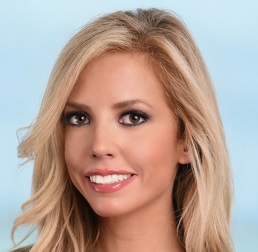
Ms. DeField has dedicated her career to helping clients manage risk and maximize insurance recovery. As part of her counseling practice, she adds value to business deals by advising clients on contractual risk transfer through indemnity, additional insured, and required insurance provisions in contracts. Ms. DeField also helps clients identify and mitigate risk before a loss occurs by conducting insurance due diligence for mergers and acquisitions and by conducting audits of clients’ insurance programs to identify gaps in coverage before renewal.

Ms. Olanrewaju advises a wide range of clients on global privacy and cybersecurity risk and compliance issues. With a particular focus in the technology, health care, retail, and infrastructure industries, she counsels on compliance with all US federal and state privacy and cybersecurity requirements, laws, and regulations, such as the California Consumer Privacy Act (CCPA), the Health Insurance Portability and Accountability Act (HIPAA), the Illinois Biometric Information Privacy Act (BIPA), and the Gramm-Leach-Bliley Act (GLBA), as well as international data protection laws, such as the EU General Data Protection Regulation (GDPR). Ms. Olanrewaju also advises clients on the responsible use of AI by employees, the negotiation of AI-related agreements, the assessment and mitigation of risks associated with AI tools, and the design and deployment of consumer-facing AI systems.
-
This 90-minute webinar is eligible in most states for 1.5 CLE credits.
-
An excellent opportunity to earn Ethics CLE credits. Note: BARBRI cannot guarantee that this course will be approved for ethics credits in all states. To confirm, please contact our CLE department at pdservice@barbri.com.
-
Date + Time
- event
Thursday, August 13, 2026
- schedule
1:00 PM ET/10:00 AM PT
I. Analysis of typical AI cybersecurity and data privacy risks
II. Understanding legal impacts
III. Cybersecurity and data privacy audits: how to incorporate AI risk into existing frameworks
IV. Incident response: examining response efficiencies for AI-related events and how to improve them
V. Cyber insurance coverage questions
VI. Recent case law addressing AI insurance coverage
VII. Emerging AI insurance products: how to assess their utility in a risk management portfolio
The panel will discuss these and other key considerations:
- How does cyber liability insurance work with other types of business coverage to address cyber risks?
- What are the latest trends and recent coverage components of AI-related losses under cyber liability insurance?
- When does AI-specific coverage become a viable option for business clients?
- How can businesses adjust cybersecurity audits to meaningfully account for AI-related risks?
- Should incident response plans look different for losses caused by AI, and if so, how?
Related Courses

CMMC Crossroads: Navigating the Phase 2 Pause, Mitigating FCA Exposure, and Improving Compliance
Thursday, November 19, 2026
1:00 PM ET/10:00 AM PT
EU Data Laws: How European Laws Affect U.S. Domestic Business Data Governance
Available On-Demand