Thank you!
The full article is available below.
You will also receive a follow-up email containing a link so you can come back to it later.
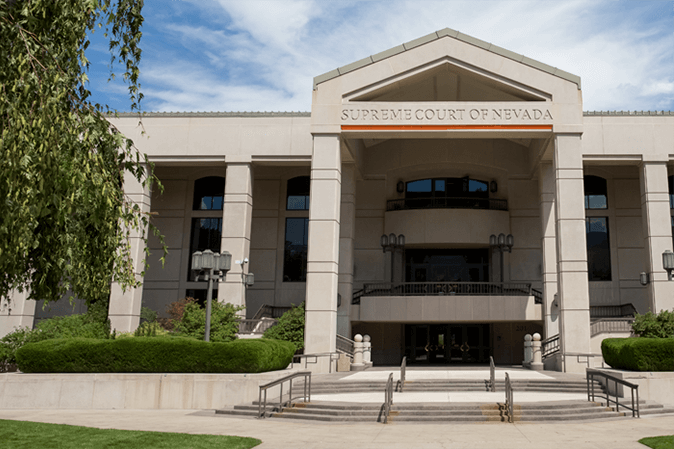
In January 2026, the state of Nevada began transitioning away from the legacy bar exam toward a three-part competency-based assessment known as the Nevada Comprehensive Licensing Examination, or Nevada Plan.
The new approach to licensure is built around three distinct components: the Foundational Law Exam (FLE), Lawyering Performance Exam (LPE), and Supervised Practice Program (SPP), along with completion of the Multistate Professional Responsibility Exam (MPRE) and Character and Fitness review. What makes the Nevada Plan so different is that you don't have to wait until graduation to begin completing some components of the licensure requirements.
10 Steps to Becoming a Nevada Attorney
Earning your license in Nevada positions you to practice in a dynamic legal market shaped by major urban centers and a growing statewide economy. According to the ABA, in 2024 Nevada had 7,563 resident attorneys, with most legal activity concentrated in the Las Vegas metropolitan area.
The Nevada licensing process can be lengthy and intricate, but BARBRI is here to guide you along your bar admissions journey. Here’s what you need to know and do for Nevada State Bar admission.
1. Earn Your Undergraduate Degree
Before taking the Law School Admission Test (LSAT), you must earn a bachelor’s degree. While some pre-law majors are more popular than others, there’s no one major that's more impressive for getting into law school. The American Bar Association does not recommend any specific undergraduate major for law school, however, Business Administration, Communications, Economics, Finance, Political Science, and Sociology are some good options.
Interest and aptitude should be the most important factors when choosing a pre-law major. Admissions committees will focus on your performance and whether you’ve developed the skills needed to do well in law school.
2. Take the LSAT
The LSAT is an integral part of law school admission. It’s the designated test to help you determine if law school is right for you.
BARBRI’s PowerScore LSAT Prep course, with our renowned LSAT Bible prep book series, lays the foundation for test day success. You’ll maximize your score (PowerScore students have seen score increases of 30 points or more) to increase your list of attainable law schools, like the William S. Boyd School of Law at the University of Nevada, Las Vegas, where the average score for acceptance is about 160.
3. Select + Attend Law School
Once you choose a law school and are accepted, it’s time to learn how to conquer the first year. By taking BARBRI Law Preview, you’ll walk into law school with an understanding of core 1L material and the skills you need to get to the top of the class.
Your first-year performance is pivotal to your overall law school success and can help open doors for you to clerkships, internships, Law Review, and future employment opportunities. BARBRI’s 1L Exam Success program and Quimbee Study Aids work in concert with your classroom learning to give you everything you need to master that crucial first year, and beyond.
As you get further along in law school and closer to earning your J.D., you’ll have the opportunity to explore different electives as you choose among multiple practice areas. BARBRI 2L/3L Exam Success covers specialized areas of law that can be challenging, so you gain understanding before you study for the bar.
4. Take the Foundational Law Exam (FLE)
Once you have earned 42 credits at an ABA-accredited law school, youʼre eligible to sit for the FLE. For most students, that means eligibility begins around the third semester of law school, during the early part of 2L year.
Because the FLE can be taken well before graduation, you may choose to complete it during law school rather than waiting. Doing so can reduce the number of licensing requirements left to manage during your 3L year and immediately after graduation.
Learn about upcoming FLE administration dates and deadlines.
Prepare for the FLE with BARBRI Nevada FLE Prep
Because the FLE can be taken while you’re still in law school, BARBRI Nevada FLE Prep is built specifically for Nevada’s Foundational Law Exam and is also designed to fit alongside law school coursework. The course provides a structured, efficient way to build mastery of the doctrinal subjects tested on the FLE while balancing classes, internships, clinics, and other law school commitments.
Check out the BARBRI Nevada FLE Prep course.
5. Take the MPRE
In addition to completing the Nevada Plan components, you’ll also need to satisfy the Multistate Professional Responsibility Exam requirement separately from Nevada's licensing examinations.
Most students take the MPRE during 2L year or early in 3L year after completing a course in Professional Responsibility. While the rules you learn in your PR or legal ethics course will apply to the MPRE, they won’t necessarily cover all the material tested. The free BARBRI MPRE Prep course gets you ready to answer questions with the mindset examiners expect.
When you register for the MPRE, you’ll likely be required to create your National Conference of Bar Examiners (NCBE) account at the same time (if you haven't already done so). Your NCBE account, with your unique NCBE Number, will be used throughout various parts of the bar admissions process.
6. Consider Starting Your Supervised Practice Requirement
The Supervised Practice Program (SPP) involves completing supervised legal work, a self-directed learning project, journaling requirements, and designated lawyering tasks under an approved supervising attorney or program.
Importantly, you donʼt have to wait until after graduation to begin this requirement.
You may be able to satisfy some or all the supervised practice requirements through experiences you're already pursuing during law school, such as:
- Law school clinics
- Externships
- Approved practical training opportunities
- Other qualifying supervised legal work
If you’re interested in practicing in Nevada, it's worth folding SPP opportunities into your 2L/3L coursework to help streamline your path to licensure after graduation.
Learn about SPP cycles and deadlines.
7. Secure Your LPE Prep Course + Register for the LPE
Unlike the Foundational Law Exam, the Lawyering Performance Exam cannot be taken during law school. You become eligible for the LPE after earning your J.D. from an ABA-accredited law school.
This performance exam is a skills-based assessment that measures your ability to complete practical legal tasks using a file of facts, authorities, and supporting documents. The LPE focuses on assessing legal analysis, organization, writing, and professional judgment.
The exam is generally offered twice each year, in January and June.
As graduation approaches, you’ll need to decide which administration best fits your circumstances. Some graduates prefer to sit for the first available administration after graduation while legal writing and law school skills are still fresh. Others may choose a later administration to allow additional preparation time while balancing work, clerkships, or job-search responsibilities.
Learn more about exam dates and deadlines.
Prepare for the LPE with BARBRI Nevada LPE Prep
Because the LPE evaluates practical lawyering skills, preparation differs from traditional multiple-choice exam study. BARBRI Nevada LPE Prep provides guided practice, feedback, and instructional support specifically designed for Nevada’s Lawyering Performance Exam.
The course is designed for both recent graduates completing the Nevada Plan, and attorneys relocating to Nevada who must complete the LPE as part of the state's licensure process.
Note: Candidates who previously completed BARBRI Nevada FLE Prep may be eligible for alumni pricing opportunities when enrolling in Nevada LPE Prep.
Check out the BARBRI Nevada LPE Prep course.
8. Apply for Character and Fitness + Complete the LPE and Any Remaining Licensure Requirements
As you move into the final stages of the Nevada licensure process, you’ll need to complete your Character and Fitness review. Under Nevada’s licensing rules, you may initiate the Character and Fitness application after completing three of the four licensing components and while registration for the final component is in progress. The four primary components are the FLE, LPE, MPRE, and supervised practice.
If you are following the typical Nevada Plan timeline, this means applying for Character and Fitness around the same time you register for the LPE (if you have already completed the FLE and some or all of the Supervised Practice Program).
Note: Every person’s timeline is different. If your final outstanding component happens to be the MPRE or SPP, your Character and Fitness timing should be based on your individual licensing progression.
Once your Character and Fitness application is underway, focus on completing any remaining requirements, including:
- Sitting for your scheduled LPE administration
- Completing the FLE if you haven’t already done so
- Finishing any remaining Supervised Practice Program requirements
- Satisfying any outstanding admission requirements
For additional licensure information, visit our Nevada-specific licensure details.
For detailed Character and Fitness eligibility requirements and application instructions, visit the State Bar of Nevada admission requirements website.
9. Get Admitted to the Bar
Once you complete all licensure components, you are almost prepared to practice law in Nevada. Check for everything you need in advance of applying for admission. Even if you’re waiting on bar exam results, there may be information you can collect during this timeframe to help expedite your application filing.
10. Continue Your Legal Education
Your legal learning journey doesn’t end when you become a practicing attorney. Continuing legal education (CLE) is an ongoing requirement to stay current on legal practices, ethics, and other professional developments that help you maintain your license.
BARBRI’s expert-led CLE programs offer digital content and CLE credit solutions unmatched in the industry to keep you ahead with the latest knowledge while meeting compliance requirements.
How Much Do Nevada Lawyers Make?
Lawyers in Nevada often work in fast‑growing urban markets and tourism‑driven legal environments. According to 2025 data from the U.S. Bureau of Labor Statistics, the average annual salary for lawyers in Nevada falls at $205,630—reflecting strong earning potential in the state.
Ready to Become a Practicing Attorney in Nevada
From passing the LSAT to attending law school, conquering the bar and continuing your legal education requirements, BARBRI is there at every step of your legal learning journey to offer a comprehensive experience for success as a lawyer in your chosen field.
Always check the State Bar of Nevada website for the most current deadlines and instructions.
Unlock the Full Article
Bring Your Goals Within ReachTell us a little about yourself and your goals to display the full article and gain access to more resources relevant to your needs.
Interested in reading more? Fill out the form to read the full article.